Text size
Line height
Text spacing
Disasters are occurring with increasing visibility across the globe, often disproportionately affecting resource-constrained and rural communities with limited access to healthcare, infrastructure, and emergency support. This interactive book introduces learners to the foundational concepts of disasters, including their definitions, classifications, phases, and predictable consequences. It highlights the unique vulnerabilities of children in these settings and the critical role healthcare professionals play in preparedness, response, and recovery. Through a global lens, learners will explore how thoughtful planning and coordination can reduce morbidity and mortality, even in low-resource environments.
After reading this book, you will be able to:
Recognize events and conditions that can lead to disasters, particularly in resource-constrained and rural settings.
Explain how individual and social factors influence vulnerability, risk, and coping in low-resource environments.
Describe the phases of a disaster and key components of disaster classification and severity.
Identify the unique needs of children and the role of healthcare professionals in disaster preparedness and response across diverse settings.
Created by the
Center for Global Health, Colorado School of Public Health
This course is owned by the Center for Global Health, Colorado School of Public Health, and has been jointly created by the Center for Global Health, Colorado School of Public Health and the Maternal and Child Health Department of Maimonides University; both of which are WHO Collaborating Centers in Maternal and Child Health. The course materials were developed with input from the American Academy of Pediatrics (AAP), the Pan American Health Organization (PAHO), and the Association for Health Research & Development (ACINDES).
with Support from the
Pediatric Pandemic Network
pedspandemicnetwork.org

The Pediatric Pandemic Network is supported in part by the Health Resources and Services Administration (HRSA) of the U.S. Department of Health and Human Services (HHS) as part of cooperative agreements U1IMC43532 and U1IMC45814 with 0 percent financed with nongovernmental sources. The content presented here is that of the authors and does not necessarily represent the official views of, nor an endorsement by HRSA, HHS, or the U.S. Government. For more information, visit HRSA.gov.

Attribution-NonCommercial-NoDerivatives CC BY-NC-ND
You are free to download and share this work for noncommercial purposes, as long as you credit the Pediatric Pandemic Network and the EMSC Innovation and Improvement Center for the original creation.
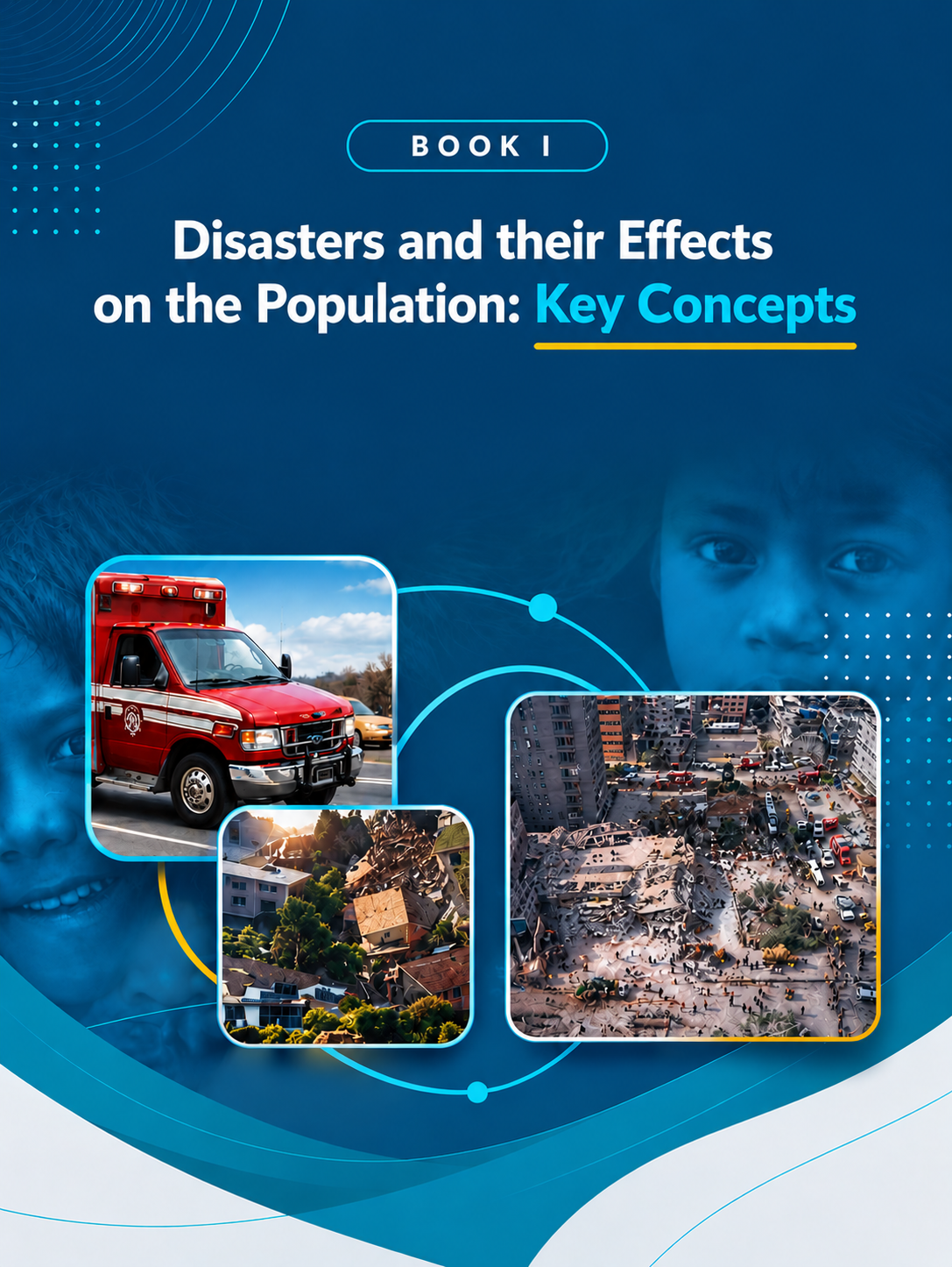
Disasters are occurring with increasing visibility across the globe, often disproportionately affecting resource-constrained and rural communities with limited access to healthcare, infrastructure, and emergency support. This interactive book introduces learners to the foundational concepts of disasters, including their definitions, classifications, phases, and predictable consequences. It highlights the unique vulnerabilities of children in these settings and the critical role healthcare professionals play in preparedness, response, and recovery. Through a global lens, learners will explore how thoughtful planning and coordination can reduce morbidity and mortality, even in low-resource environments.
After reading this book, you will be able to:
Recognize events and conditions that can lead to disasters, particularly in resource-constrained and rural settings.
Explain how individual and social factors influence vulnerability, risk, and coping in low-resource environments.
Describe the phases of a disaster and key components of disaster classification and severity.
Identify the unique needs of children and the role of healthcare professionals in disaster preparedness and response across diverse settings.
Select the Continue button to log in or sign up for an account.
Have questions about log-in or sign-up? Please visit our support documentation.
Having trouble accessing content? Please contact us.

